Global Budget Templates allow you to save a configured quote or budget and reuse it across multiple projects. Because templates are shared globally among all system users, they help your team maintain pricing consistency and save time when spinning up new projects.
Saving a Budget to Global Templates
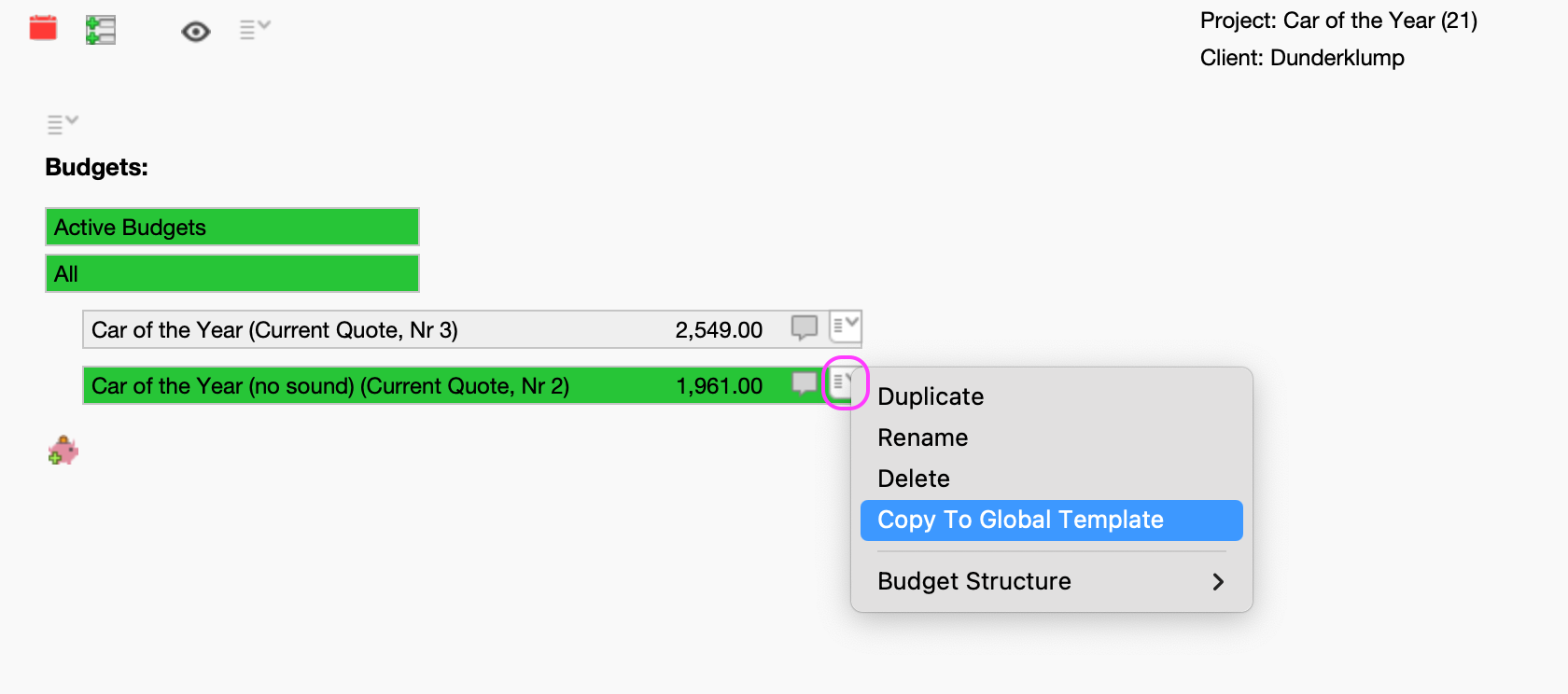
When you have a budget or a quote you want to reuse, you can easily save it globally:
Click on the drop-down arrow next to the Budget you wish to save.
Select Copy To Global Template.
Give the template a descriptive and clear name so other team members can easily identify it.
Sorting Global BudgetTemplates (available from v7.4 onwards)
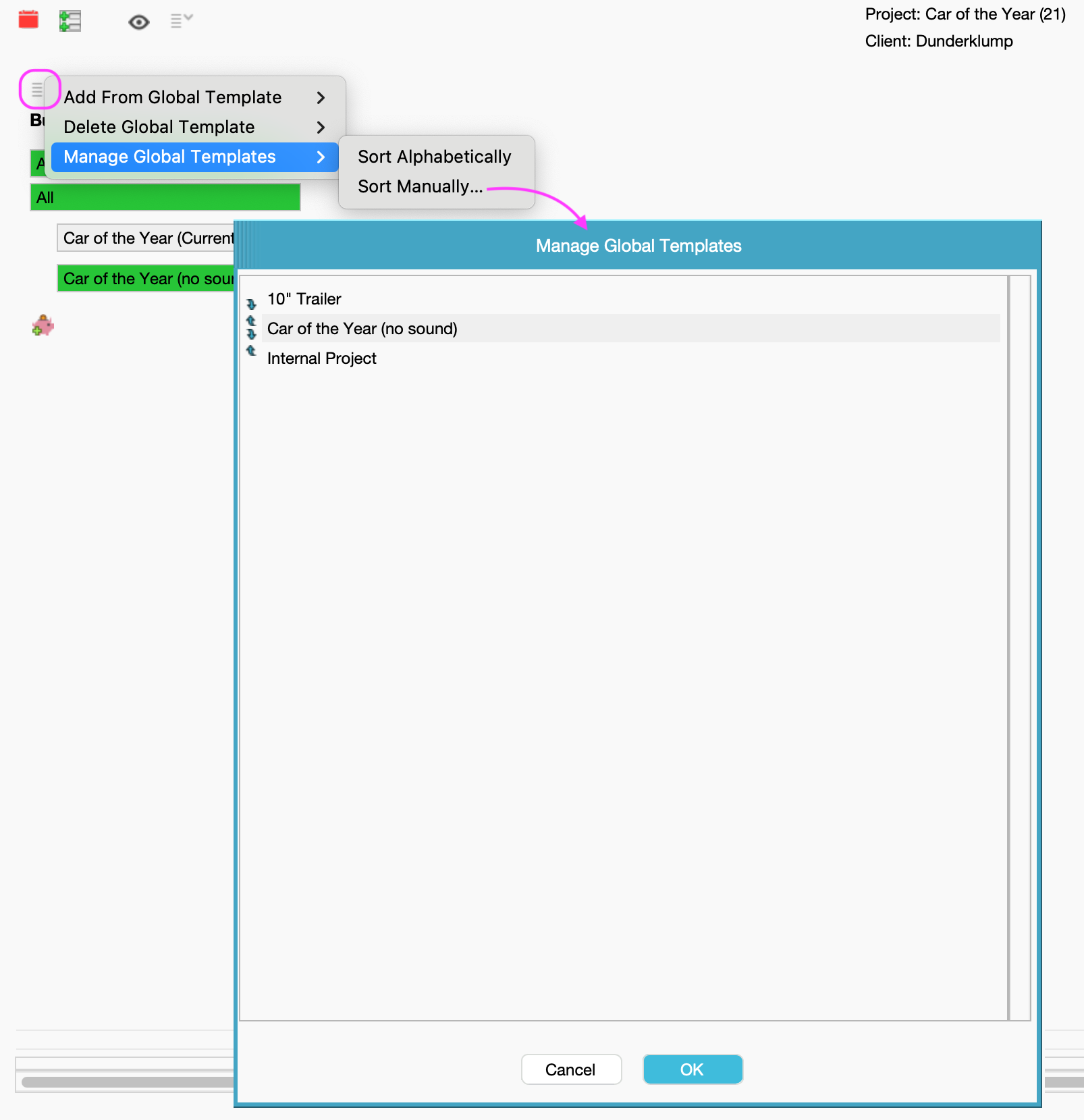
To help you organize growing template libraries, select Manage Global Templates from from the drop-down menu. You can choose between two sorting options:
Sort Alphabetically: Instantly reorders the global template list from A–Z (case-insensitive).
Sort Manually: Opens a dialog window where you can use drag-and-drop to reorder your templates into a custom sequence.
Removing Global Templates
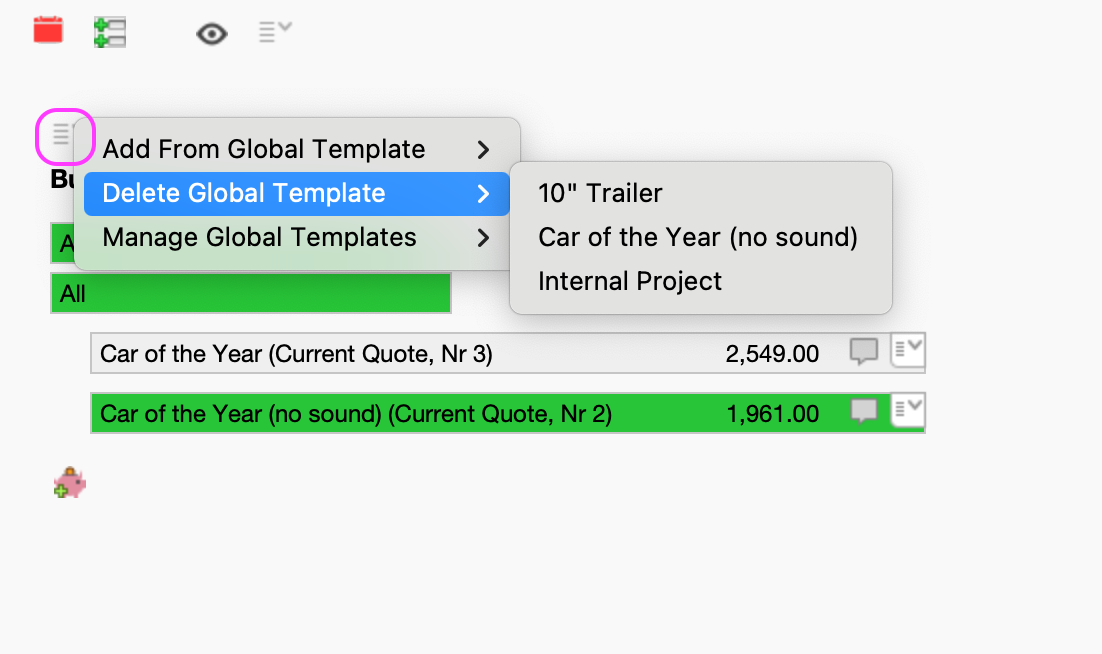
To keep your template library clean, you can remove outdated templates:
From the drop-down menu, select Delete Global Template.
Choose the specific template you want to remove from the list.
Creating a new Budget from a Saved Global Template
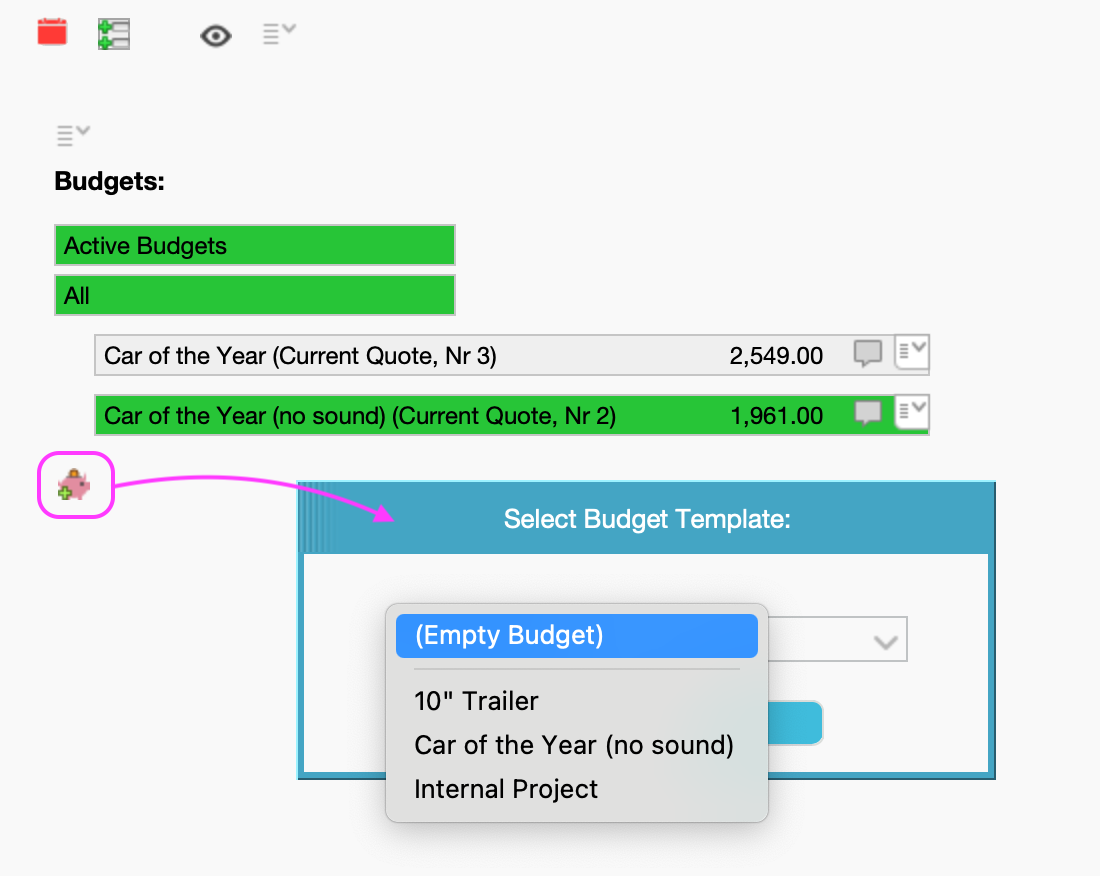
To re-use a saved template in a project, you have two options:
Option A: Click on the New Budget icon (the pig icon with a green plus sign) and select your template from the list.
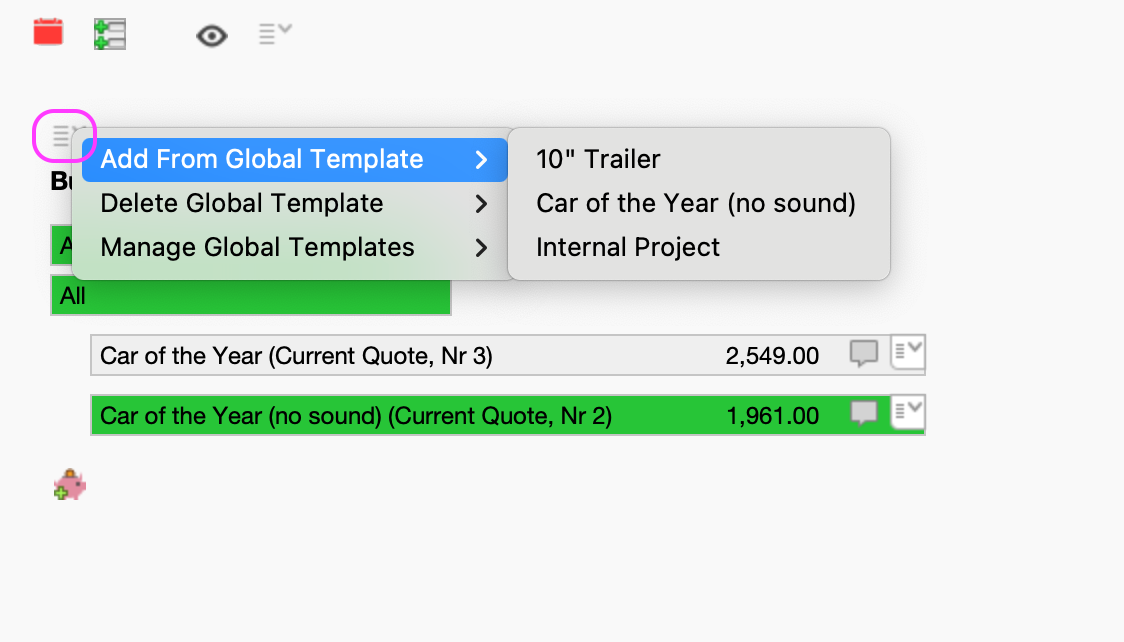
Option B: Click the drop-down menu located just above the Budgets section and choose Add From Global Template.
What happens next?
Once selected, a new budget is instantly added to the project's budget list.
Rename it freely: The budget will initially take the template's name, but you can click on the drop-down menu next to its name and select "Rename" to match your current project needs (e.g., changing "2026 Commercial Master" to "Nike Campaign Q1 - Draft 1").
Customize it: Loading a template serves as a starting blueprint, meaning you can freely add, modify, or delete lines and adjust quantities to suit your current client requirements without affecting the original master template.
Important Prompts When Loading a Template
1. Applying Project Rate Card
If a Rate Card is already applied to your Project, farmerswife will protect those agreed-upon rates. When you create a budget from a Global Template, a pop-up window will automatically ask if you want to apply the existing Project Rate Card to the new budget. See Project Rate Cards for more details.
2. Resetting Global Budget Template Rates to List Price
You may see a dialog window asking: "Reset To List Prices Rates In The New Budget?"

This dialog appears if the rates saved in your template differ from the current List Prices configured in your Object Manager.
Select "Yes": If your master list prices have been updated in the Object Manager and you want this new budget to reflect those new, updated rates.
Select "No": If you intentionally changed the rates inside the template to reflect "special pricing" and want to preserve those specific template rates for this budget.
Example: List prices have been updated in Object Manager
A Global Budget Template had been created with two lines:
- Offline / Editing – Day: Sell Rate 500
- CG / 3D – Animation – Day: Sell Rate 700

Later, the sell rate for the Offline Editing is updated in the Object Manager to 600.

Next time that you create a new budget from this template, to get this budget to include the new rate click Yes on the dialogue: “Reset To List Price Rates In The New Budget?”

Tip: If you are unsure, click Yes to use current list prices. Alternatively, you can generate two separate budgets (one choosing "Yes" and one choosing "No") to visually compare the rate differences side-by-side before deciding which one to keep.
Eventually if needed, you can create a new Global Budget Template that includes the updated rates and remove the old one. Or you can keep both making sure that the names are clearly stating, e.g. "Simple Post job 2025", "Simple Post job 2026".
Was this article helpful?
That’s Great!
Thank you for your feedback
Sorry! We couldn't be helpful
Thank you for your feedback
Feedback sent
We appreciate your effort and will try to fix the article